How to Treat Pigmentation on Your Face: Expert Advice from My Cosmetic Doctor in Harborne, Birmingham
Facial pigmentation is one of the most common concerns I treat at My Cosmetic Doctor here in Harborne, Birmingham. As a GP with a Dermatology Diploma and an Aesthetic Doctor, I’ve seen every type of pigmentation: post-inflammatory hyperpigmentation (PIH), melasma, sunspots, freckles, and sun damage.
But while pigmentation is common, the right treatment approach is highly personal — and, in many cases, misunderstood.
This guide breaks down what pigmentation actually is, why it happens, and how I safely and effectively treat it in my clinic using a blend of medical-grade skincare, prescription formulations, and carefully selected in-clinic treatments.
Understanding the Different Types of Facial Pigmentation
Different pigmentation types require different treatment strategies, which is why diagnosis is the first and most important step.
1. Melasma
Melasma is a chronic form of pigmentation commonly triggered by hormones, heat, and UV exposure. I often explain to patients that melasma is a long-term condition — something we manage, not “cure” — and it can sit in the epidermis or deeper in the dermis. This helps me understand how responsive it will be to treatment.
2. Post-Inflammatory Hyperpigmentation (PIH)
This is extremely common in my Birmingham patient base, especially those with darker skin tones (Fitzpatrick skin types 4 -6). It usually follows acne, eczema, or irritation from products, and many of my consultations begin with removing the harsh skincare that has been unknowingly worsening the pigmentation.
3. Sun Damage and Freckles
Most often seen in Fitzpatrick types 1 and 2, these are linked to cumulative UV exposure. These respond well to a mixture of topical treatment and chemical peels.
Why Patients in Birmingham Often Feel Nervous About Pigmentation Treatment
Many of my Fitzpatrick 4 to 6 patients are understandably worried about:
- Chemical peels making pigmentation worse
- Harsh acids burning their skin
- Being treated by practitioners unfamiliar with darker skin tones
- Laser treatments that aren’t suitable for their pigmentation type
These concerns are valid — especially because melanin-rich skin requires a gentler, more strategic approach. My job is to remove the fear, explain the “why” behind each decision, and treat the pigmentation without causing more.
My Pigmentation Treatment Approach at My Cosmetic Doctor
Step 1: Clean Up the Current Routine
The first thing I often do is remove products that may be irritating or disrupting the skin barrier. A compromised barrier = more inflammation = worsening pigmentation. This is one of the most common reasons patients’ pigmentation hasn’t improved before seeing me.
Step 2: Build a Medical-Grade and Prescription-Based Skincare Regime
I use a combination of:
- medical-grade skincare
- prescription-only formulations
- specific active ingredients such as azelaic acid, tranexamic acid, AHAs, hydroquinone and retinoids.
Step 3: Medium-Depth Chemical Peels
In my clinical experience, nothing lifts pigmentation as reliably as a series of medium-depth chemical peels performed safely and gently.
My approach is:
- multiple treatments, particularly for chronic pigmentation such as melasma. In some cases such as sun spots, a single peel is quite effective.
- always supported with the right skincare before and after
- tailored to your skin type, sensitivity, and triggers
Peels are especially effective for PIH and sun damage, and can help melasma when used strategically.
Step 4: Polynucleotide Treatments (PNs) Where Needed
Polynucleotides are incredibly valuable for:
- reactive or inflamed skin
- Fitzpatrick 4 and 5 patients who are at higher risk of PIH
- the under-eye area, where many patients develop dark or dry circles
- improving recovery time after peels
- supporting skin healing in patients 40+
By calming inflammation and supporting regeneration, PNs help ensure pigmentation treatment is not only effective but also safer.
Real Case Study From My Clinic
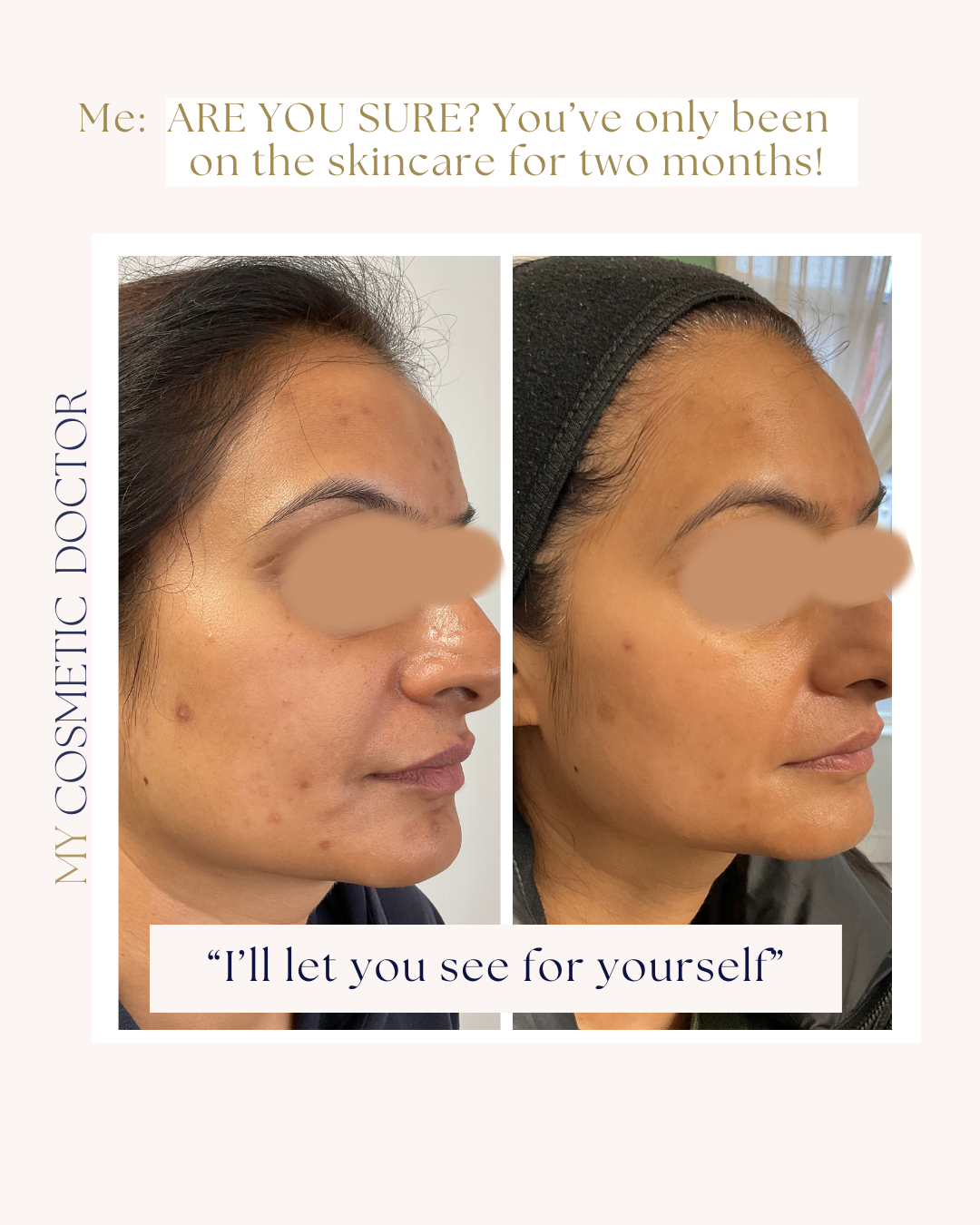
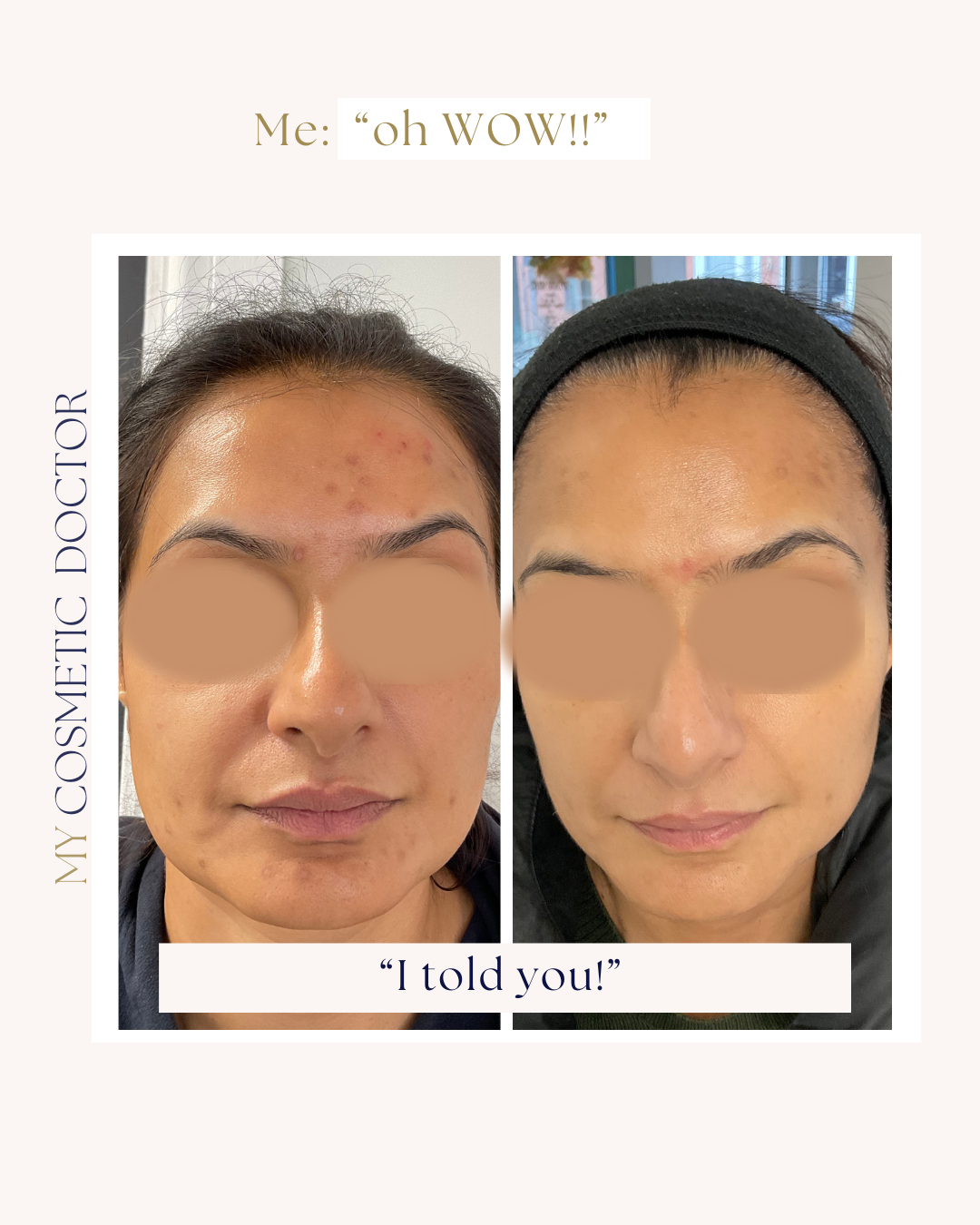
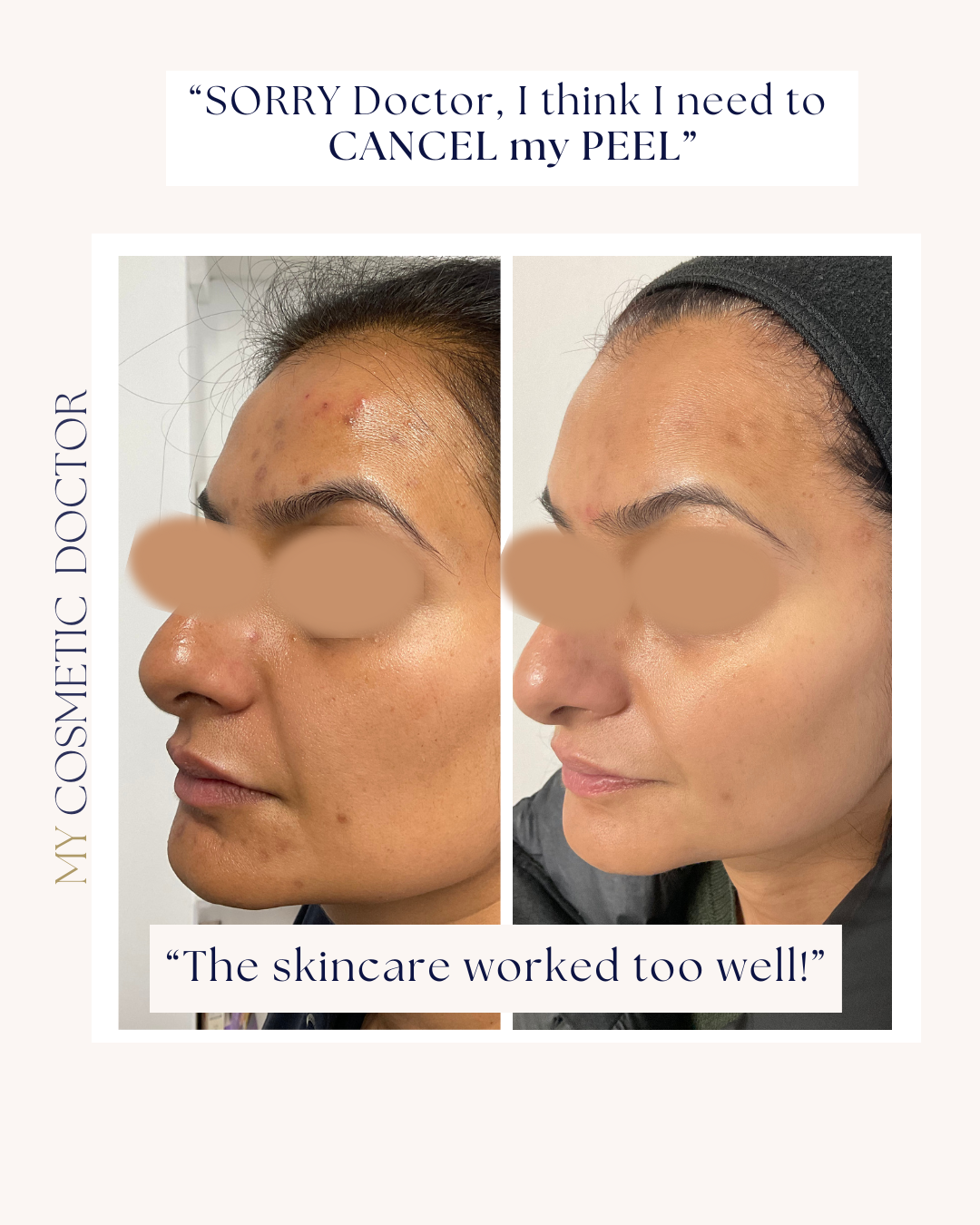
Patient: 43-year-old woman with extensive PIH from acne
Skin type: Fitzpatrick 5
Treatment:
- A carefully structured 2-month skincare protocol
- Removal of all irritating products
- Gradual introduction of prescription and medical-grade ingredients. No hydroquinone was required in this case.
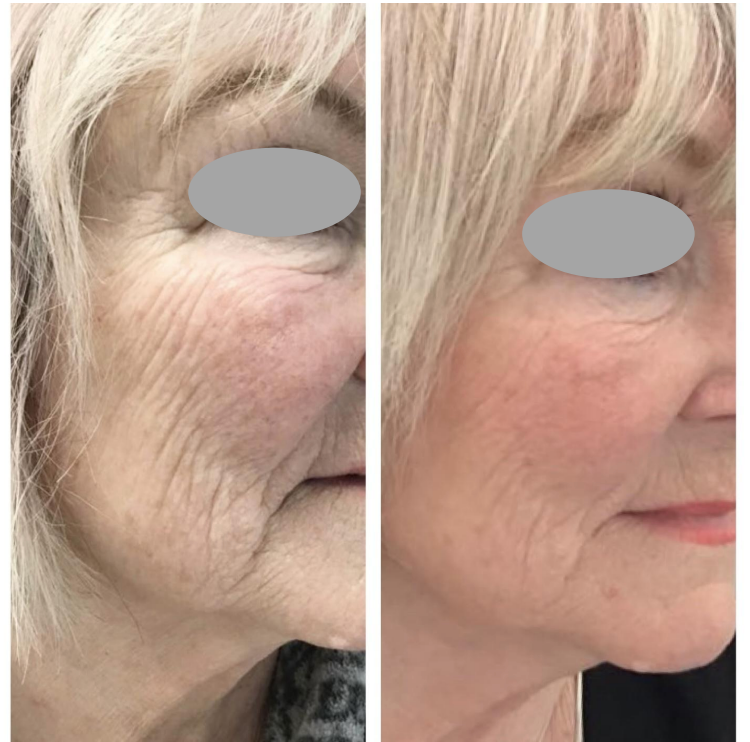
Outcome: Her improvement was so significant that she cancelled her chemical peel appointment — the skincare alone delivered results she never thought possible. You can see her result below by scrolling through the photos.
My Golden Rules for Treating Pigmentation
These are the principles I share with every patient:
1. Melasma is chronic — we manage it, not cure it.
2. Consistency always beats intensity. Harsh or aggressive treatments often worsen pigmentation.
3. Barrier health comes first.
4. Expect multiple treatments, not miracles from a single peel especially in case of melasma.
5. Your age, hormones, and skin type all shape the treatment plan.
6. Stop using products that irritate your skin — even if they claim to “brighten.”
Common Myths I Hear in Clinic
❌ “One peel will fix it.”
Pigmentation requires a plan, not a quick fix.
❌ “High-strength acids work best.”
This often leads to inflammation and worsening PIH.
❌ “Skincare doesn’t work.”
Done correctly, skincare can transform pigmentation.
Your Treatment Plan Should Be Individualised
There is no universal “best treatment” for pigmentation. What works for a Fitzpatrick 2 patient with sunspots will be completely different from what works for a Fitzpatrick 5 patient with PIH or melasma.
At My Cosmetic Doctor in Harborne, Birmingham, every pigmentation plan I create is personalised, based on:
- your skin type
- your history
- your triggers
- your lifestyle and stage of womanhood
- the depth and type of pigmentation
This is how we get results safely.
Ready to Treat Your Pigmentation?
Whether you’ve tried everything or you’re just starting your skincare journey, I can help you understand what’s happening in your skin and create a plan that genuinely works — without damaging your barrier or worsening the pigmentation.
Book your consultation at My Cosmetic Doctor in Harborne, Birmingham, and let’s start your personalised pigmentation journey.
Our cosmetic doctors in Harborne, Birmingham, also take great pride prioritising continuity of care and are dedicated to delivering natural-looking results. Schedule a consultation with our clinic and experience the expertise and personalised care that sets us apart.